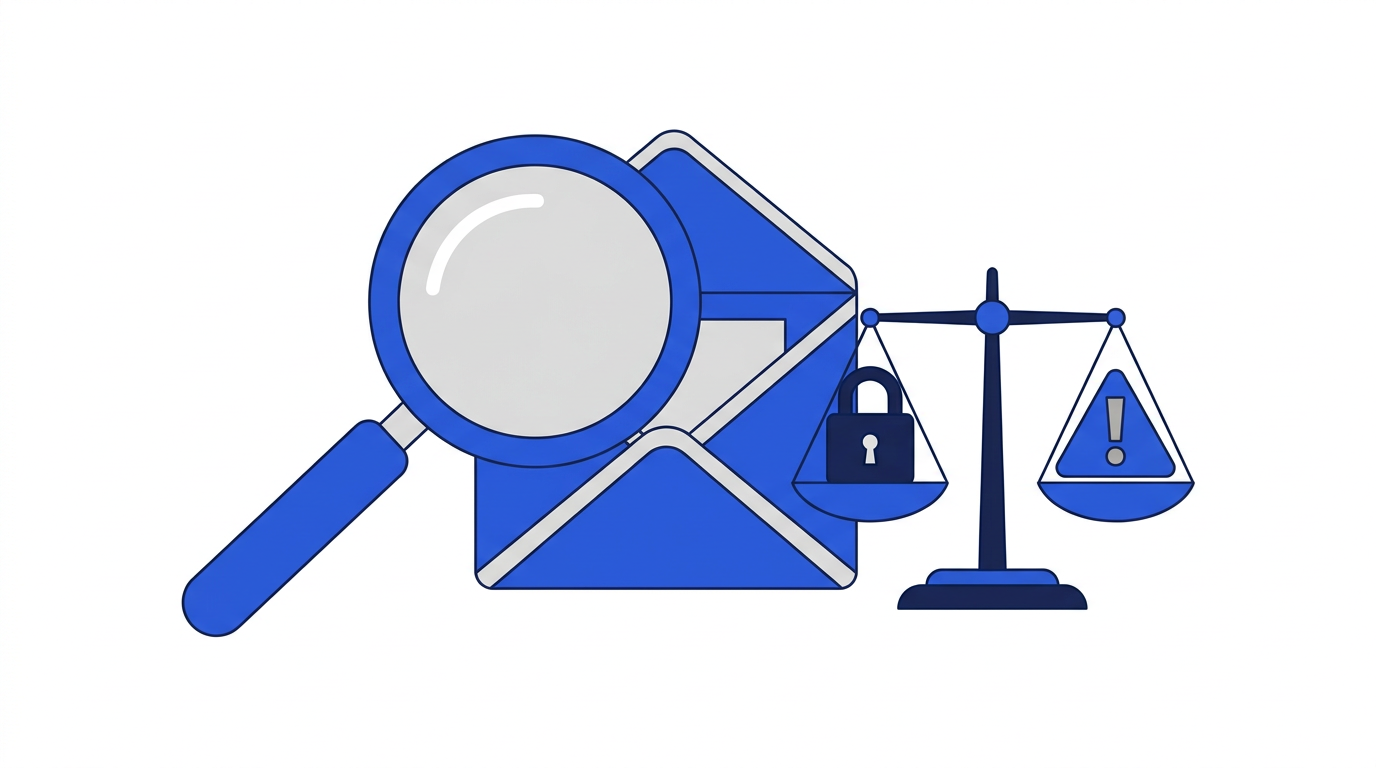
A temporary email address is a working email address that exists for a short, fixed period and then disappears along with every message it received. You do not register for it, you do not set a password, and you do not have to remember it. You open a page, an address is generated for you, and you can start receiving mail immediately. When the timer runs out, the address stops accepting mail and its contents are deleted.
People use temporary email for one simple reason: a lot of websites demand an email address for things that do not deserve your real one. Downloading a PDF, reading one article behind a sign-up wall, joining public Wi-Fi, trying a new app for five minutes, entering a contest. In each case you only need to receive a single message, usually a confirmation link or a short code. After that, the site still has your address and is free to send you whatever it likes for years.
Temporary email in one sentence
A temporary email is a receive-only inbox you can use once and walk away from. You will also hear it called temp mail, disposable email, throwaway email, burner email, 10 minute mail or trash mail. The names vary but the idea is the same: an address that is real enough to pass a website's check and short-lived enough that it cannot become a long-term spam magnet.
How a temporary email address actually works
Temporary email is not a trick or a fake address. It uses the same internet email system as Gmail, Outlook or your work account. The difference is in what happens to the messages after they arrive, and how long the address is allowed to exist.
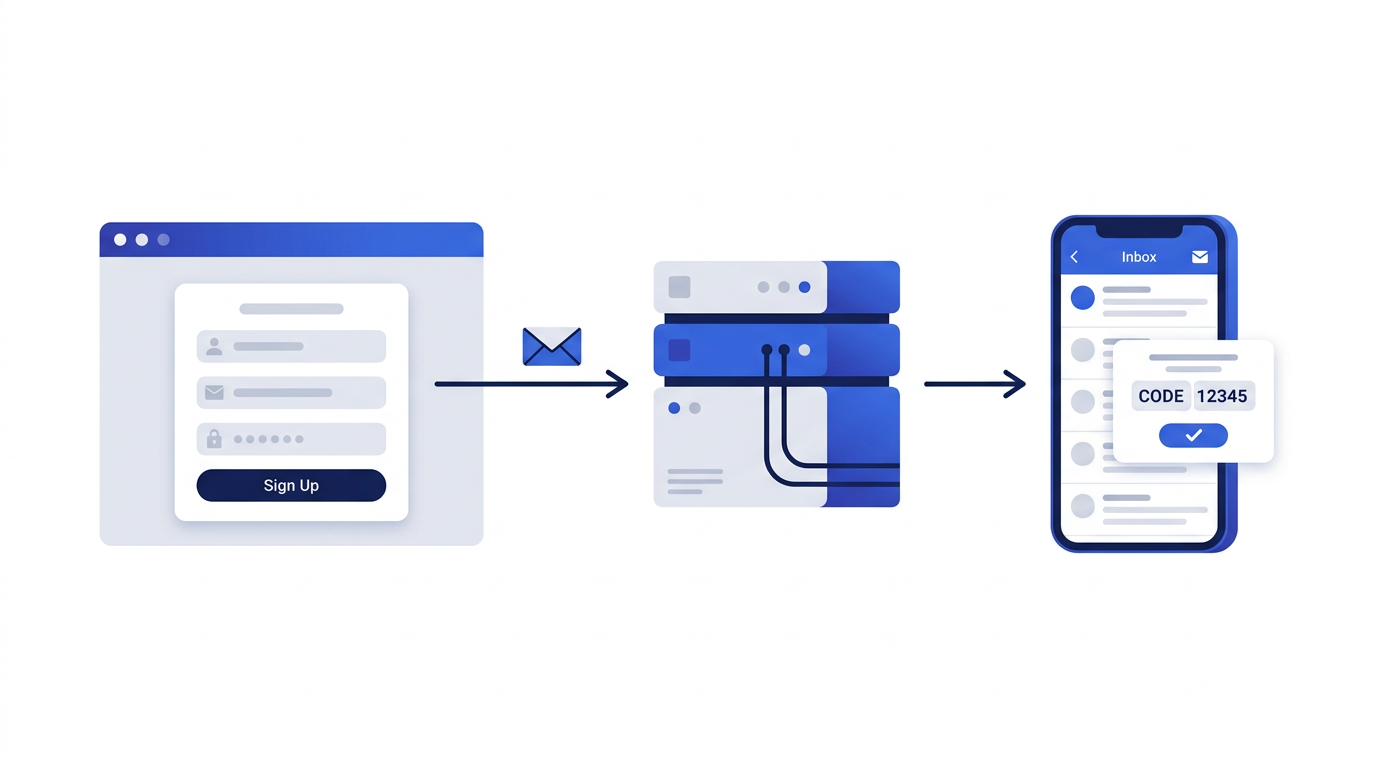
1. The domain is set up to receive mail
Every email address has two parts: the name before the @ and the domain after it. The service that runs a temporary email site owns its domain and publishes mail exchange (MX) records for it. These records are public directions that tell other mail servers where to deliver email for that domain. Because the records exist and point to a working mail system, messages sent to any address on that domain have somewhere to go.
2. You are given a random, unclaimed address
When you open the page, the site creates a random name such as quietfox4821 and pairs it with the domain. The name is random so that nobody else is likely to guess it, and it is reserved for your browser session so that messages sent to it appear only in your inbox. On 10 Minute Emails this takes less than a second and requires no input from you at all.
3. Messages are received, cleaned and displayed
When a website sends your confirmation email, its mail server looks up the MX records, connects to the receiving service and hands the message over. The service matches the recipient address to your inbox and stores the message temporarily. A responsible service also cleans each message before showing it: scripts are removed, remote images that could track you are blocked, and attachments are not stored. The page checks for new mail every few seconds, so the message appears without you needing to reload.
4. The address expires and everything is deleted
Every temporary inbox has a timer. On this site the default is ten minutes, which you can extend in ten-minute steps up to five times if a message is slow to arrive. When the timer reaches zero, the address stops accepting new mail and the stored messages are permanently deleted. There is no archive, no backup and no way to restore an expired inbox. That is the whole point.
What a temporary email is good for
Temporary email works best for low-stakes situations where you need to prove you have an email address once and never need to hear from the sender again. Common examples include:
- Downloading a free guide, template or report that is locked behind an email form.
- Creating a throwaway account on a forum or comment section you will visit once.
- Connecting to Wi-Fi at an airport, café or hotel that asks for an email first.
- Trying an app or online tool before deciding whether it deserves your real address.
- Getting a one-time discount code without joining a mailing list forever.
- Testing your own website sign-up or password-reset emails during development.
If you are not sure whether a situation qualifies, our guide on when to use a temporary email address walks through more examples, and our list of benefits of disposable email explains what you gain each time.
What a temporary email is not good for
The same features that make temporary email useful also make it a bad choice for anything important. Because the inbox disappears, you lose access to every account you register with it. If that account later sends a password reset, a security alert or a receipt, you will never see it.
- Banking, payment apps, investment or crypto accounts.
- Government, tax, healthcare and insurance services.
- Your work, school or university accounts.
- Online shops where you save payment details or need delivery updates.
- Any account you want to keep, or any account protecting something valuable.
We cover this in more depth in why you should avoid temporary email for banking. The short version: if losing the account would be a problem, use your real address.
Is a temporary email anonymous?
A temporary address keeps your real email out of a website's database, which is a meaningful privacy improvement. It does not make you anonymous. The website you sign up for can still see your IP address, browser and device details, and anything else you type into its forms. If you need strong anonymity, a disposable address is only one small piece of the picture. Our article on how disposable emails help protect your privacy explains exactly what is and isn't protected.
How temporary email differs from aliases and catch-all addresses
There are other ways to avoid handing out your main address. Email aliases, offered by many providers and privacy services, forward mail to your real inbox and can be switched off later. Catch-all addresses accept mail for any name on a domain you own. Both are good options for accounts you want to keep but control. A temporary email is different because nothing connects it to you at all, and nothing remains afterward. Read email aliases vs. disposable email addresses and what is a catch-all email address if you are deciding between them.
Why some websites block temporary email
Some websites maintain lists of known temporary email domains and refuse sign-ups from them. They usually do this to discourage fake accounts, free-trial abuse or spam. If a site rejects your temporary address, that is a signal the site expects a long-term relationship with you. Decide whether you actually want that relationship. If you do, use your real address or an alias. If you don't, it may be a site worth skipping.
Using a temporary email responsibly
Temporary email is a privacy tool, not a way around the rules. Using it to create fake reviews, evade bans, abuse free trials repeatedly or harass people is prohibited on this site and on most others. Used normally, to avoid unwanted mail and keep your real inbox clean, it is a perfectly reasonable thing to do. Websites ask for your address for many reasons, which we explain in why websites ask for your email address.
Getting started
If you have never used one before, the easiest way to understand temporary email is to try it. Open the temporary email generator on our home page and an address will be waiting for you. Copy it, paste it into the form that is asking for an email, and watch the confirmation arrive. Our step-by-step guide on how to use a 10-minute email address covers the process in detail, including what to do if a message is slow.
Frequently asked questions
Is a temporary email address a real email address?
Yes. It is a genuine address on a domain with working mail records, so other mail servers deliver to it normally. It simply expires after a short time and cannot send mail.
How long does a temporary email last?
It depends on the service. On 10 Minute Emails an address lasts 10 minutes by default and can be extended by 10 minutes up to five times, for a maximum of one hour.
Can I get my temporary inbox back after it expires?
No. Expired addresses and their messages are permanently deleted. Read what happens when a temporary email expires for details.
Is it legal to use a temporary email?
Using a temporary email to protect your privacy is legal in most places. Using it for fraud, abuse or to break a website’s rules is not acceptable.