A temporary email address is a great tool, but only in the right situations. Use it in the wrong place and you can lose access to an account you care about. Use it in the right place and you avoid spam, tracking and data breaches with almost no effort. The trick is being able to tell the difference quickly, while a sign-up form is waiting for you.
The two-question test
Before you type an email address into any form, ask yourself:
- 1Will I ever need to receive another email from this website, such as a password reset, receipt or security alert?
- 2Would it be a problem if I lost access to this account forever?
If the answer to both is no, a temporary email is a good choice. If either answer is yes, use your real address or an email alias that forwards to it.
Good times to use a temporary email
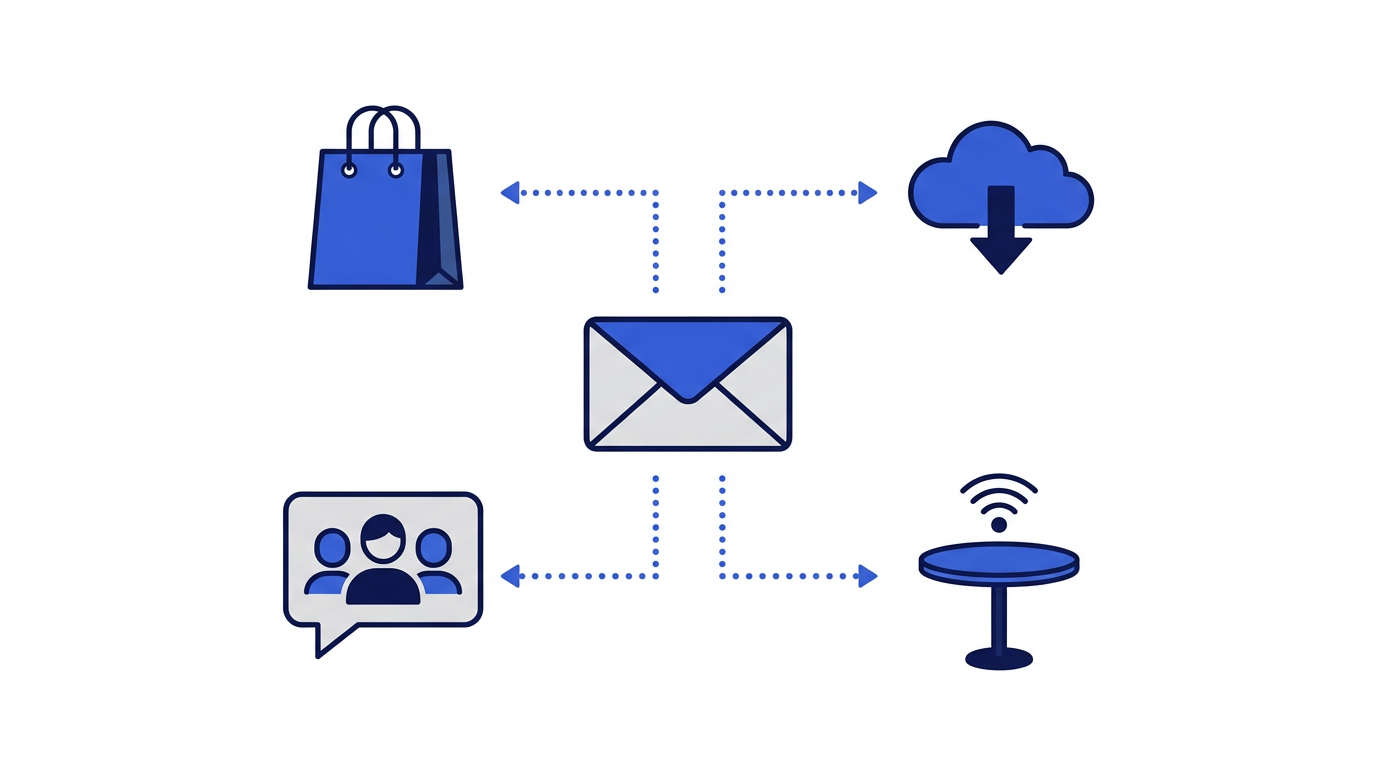
Downloading gated content
Free e-books, white papers, templates and reports are often locked behind an email form. The company wants to add you to its marketing list. A temporary address gets you the download link without the follow-up campaign.
Public Wi-Fi sign-in
Airports, cafés, hotels and shopping centers often ask for an email before connecting you. You need the internet for an hour; they want a marketing contact for years. A temporary address satisfies the form and keeps your inbox clean.
Trying a new app or service
When you want to see what a tool can do before committing, a temporary email lets you explore without handing over your details. If you decide to keep using it, create a proper account with your real address or an alias later.
One-off forum posts and comments
Sometimes you need an account just to ask a single question or leave one comment. A temporary address avoids a lifetime of digest emails and notifications you will never read.
Contests and one-time discount codes
Many shops offer a discount for signing up to their newsletter. If you only want the code for one purchase, a temporary address gets it without the weekly promotions. Bear in mind that you will still want your real address for the order itself, so you receive the receipt and delivery updates.
Testing your own website
Developers and site owners use temporary inboxes to check that sign-up confirmations, password resets and notifications are delivered and look right. Each test gets a fresh, real address. See can temporary emails receive verification codes for what to expect.
When not to use a temporary email
- Banking, payments and investment accounts. Read why to avoid temporary email for banking.
- Government, tax, healthcare and insurance services.
- Work, school or university accounts.
- Online purchases where you need receipts, warranties or delivery updates.
- Cloud storage, photo libraries or anything holding personal data.
- Social media or messaging accounts you plan to keep.
- Anything you may need to recover with a password reset.
- Conversations with real people who need to reply to you.
Gray areas
Some situations fall in between. A free trial of a paid service, for example, may need your payment details, in which case you should use your real email so you receive billing notices and can cancel properly. A newsletter you genuinely want to read is better delivered to an alias than to a temporary inbox that expires before the next issue. Think about the full lifetime of the relationship, not just the sign-up moment.
What if a website rejects temporary email?
Some websites block known temporary email domains. This is usually a sign that the site expects you to return, or that it relies on email for account security. Decide whether you actually want an ongoing relationship. If you do, use your real address or an alias. If you don't, consider whether you need the site at all. We explain the motivations in why websites ask for your email address.
Make it a habit
The more often you pause and apply the two-question test, the more natural it becomes. Over time, your real inbox fills with messages you actually want, while one-off sign-ups vanish on their own. Keep the temporary email generator bookmarked so it is always one click away.
Frequently asked questions
Is it okay to use a temporary email for a free trial?
If the trial requires payment details, use your real email so you receive billing notices and can cancel. For trials with no payment, a temporary email is fine.
Should I use a temporary email for online shopping?
Use your real address for actual purchases so you get receipts and delivery updates. A temporary email is fine for browsing or claiming a one-time discount code.
Can I use a temporary email for social media?
Not for accounts you want to keep. If you lose access to the email, you cannot recover the account. Use your real address or an alias.